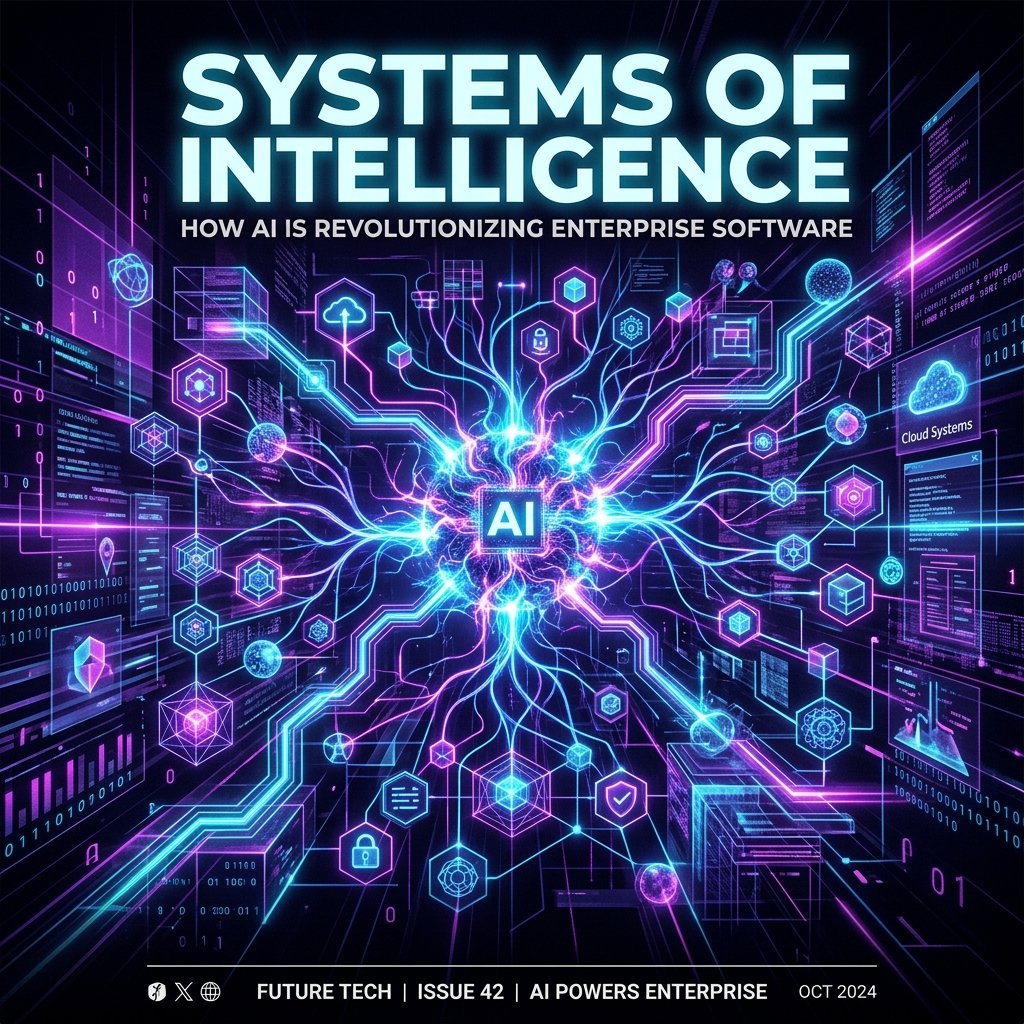
The enterprise software landscape is undergoing a seismic transformation driven by artificial intelligence. What was once the domain of data scientists and research labs is now becoming an integral part of every business application, from CRM systems to supply chain management tools.
1. AI-Native Applications
The next generation of enterprise software won't simply add AI features to existing products — it will be built from the ground up with AI at its core. These AI-native applications understand context, learn from user behavior, and proactively surface insights and recommendations without being asked.
2. Autonomous Decision-Making
While today's AI systems primarily assist human decision-making, we're rapidly moving toward autonomous systems that can make routine decisions independently. From dynamic pricing engines to automated inventory replenishment, AI is taking on operational tasks that previously required human judgment.
3. Multimodal AI Interfaces
The future of enterprise interaction isn't just text-based chatbots. Multimodal AI systems that combine natural language understanding with computer vision, voice recognition, and gesture detection will create more natural, intuitive ways for workers to interact with business systems.
4. Edge AI for Real-Time Processing
As IoT devices proliferate across manufacturing floors, retail stores, and logistics networks, the need for real-time AI processing at the edge — rather than in distant cloud data centers — is becoming critical. Edge AI enables instantaneous decision-making without network latency.
5. Responsible AI and Governance
As AI systems take on more critical business functions, the demand for transparency, fairness, and accountability is growing. Enterprise AI governance frameworks are becoming as important as the AI models themselves, ensuring that automated decisions are explainable and bias-free.
What This Means for Your Business
The organizations that will thrive in this new landscape are those that start investing in AI capabilities today — not just in technology, but in the talent, data infrastructure, and organizational culture needed to fully leverage these powerful tools. The question is no longer whether to adopt AI, but how quickly you can integrate it into your core operations.